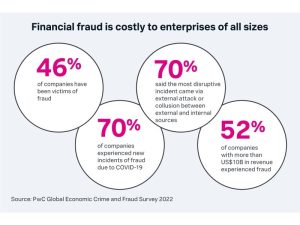

Financial crimes have devastating impacts on businesses, undermining the development of economies and their stability. According to the Office of the Comptroller of the United States Currency (USD) Financial crimes threaten the safety and soundness of financial systems world-wide. In some cases, these crimes threaten the security and safety of the nation. These crimes range from fairly simple operations carried out by individuals or small groups to highly sophisticated rings seeking funding for criminal enterprises or terrorism.
 To improve compliance, scale operations, and control costs, financial institutions need a tech-enabled cost-effective sustainable solution to mitigate financial crime risks. Using our deep industry knowledge and actionable expertise, BlueChip Consults helps clients make sound decisions about the strategic, operational and technology aspects of their financial crime risk management programmes. There are essentially seven groups of people who commit various types of financial crime:
– Organised criminals, including terrorist groups, are increasingly perpetrating large-scale frauds to fund their operations and activities.
– Corrupt heads of states may use their positions and powers to loot the coffers of their countries.
– Business leaders or senior executives manipulate or misreport financial data in order to misrepresent a company’s true financial position.
– Employees from the most senior to the most junior steal company funds and other assets.
– From outside the company, fraud can be perpetrated by a customer, supplier, contractor or by a person with no connection to the organisation.
– Increasingly, the external fraudster is colluding with employees to achieve bigger and better results more easily.
– Finally, the successful individual criminal, serial or opportunist fraudsters in possession of their proceeds are a further group of people who have committed a financial crime.

How We Assist
– Design crime-prone metrics to organizations based on clients’ business modules and operational dynamis
– Conduct specialized training/education of all staff in job functions/procedures relating to AML compliance
– Undertake reviews of business processes and recommending improvements where practical
– Provide AML Subject Matter Expertise (“SME”) on applicable laws and regulations
– Updating operational procedures and communicating changes to the KYC Standards and Sanctions Standards
– Provide guidance on, and assist in drafting certain policies and procedures targeted process flows
– Lead review of findings from compliance assurance reviews, compliance testing, and other internal reviews to identify trends, patterns or sanctioned related themes.